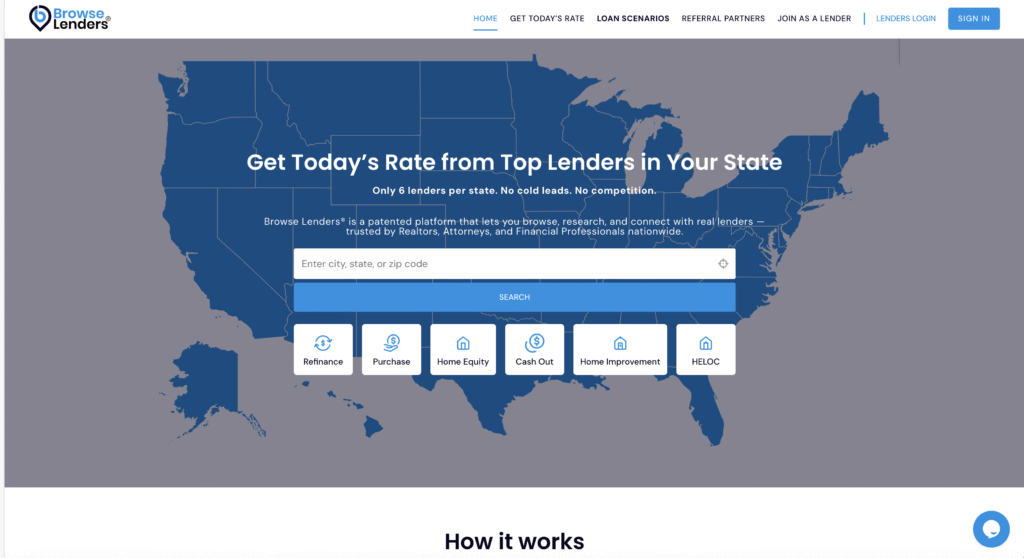
Browse Lenders® Connects You to the Right Lenders by Trust Tier
Most people believe credit readiness means having a “good” score, but the truth is more precise — and more powerful. The number that defines your financial life is not just your high score or low score; it’s your Middle Credit Score® — the score used by mortgage lenders, insurance underwriters, and financial institutions to classify your trust level. This single score determines how systems interpret your reliability, not how you feel about your progress.
When your Middle Credit Score® falls below key thresholds, every decision around you changes: rates increase, deposits rise, premiums adjust, and approval confidence drops. You might earn the same income, pay your bills on time, and even carry less debt than others — yet still find that the system ranks you lower. That’s because institutions are trained to assess trust tiers, not personal intentions.
The reality is simple: until you understand how your Middle Credit Score® defines your readiness, you are reacting to decisions rather than directing them. The goal of this stage — Credit Readiness for Life — is to shift that control back to you, permanently.
How Institutions See You — Not How You See Yourself
Credit readiness is not emotional; it’s algorithmic. Banks, insurers, and employers operate through data-driven systems designed to calculate trust velocity — the measurable reliability of your financial behavior over time. Your Middle Credit Score® sits at the center of this calculation, functioning as the system’s anchor.
From a lender’s perspective, risk is not about whether you are “good” or “bad” with money; it’s about predictability. A 640 score signals uncertainty. A 740 score signals reliability. That 100-point gap doesn’t just change your rate — it changes your classification. It determines whether your application flows through the “expedited approval channel” or the “manual review queue.”
Institutions classify borrowers into tiers:
- Penalty Tier: Middle Credit Score® under 640 — higher deposits, limited loan products, and lower trust weighting.
- Neutral Tier: Middle Credit Score® between 641–719 — acceptable but not advantaged.
- Premium Tier: Middle Credit Score® above 720 — best rates, waived fees, and maximum credit leverage.
Each tier alters the opportunities presented to you. The difference between “barely approved” and “preferred status” is not luck — it’s literacy. Once you learn how your Middle Credit Score® governs that lens, you stop being a data subject and start being a strategist.
How Life Expands When Trust Increases
Improving your Middle Credit Score® does more than qualify you for lower rates — it recalibrates your entire financial ecosystem. Readiness means that every major life decision becomes less expensive, less restricted, and more under your control.
When your trust tier improves, insurance carriers view you as less risky, reducing premiums. Landlords see you as more reliable, lowering deposits. Lenders categorize you as lower cost to service, unlocking preferred products and faster approvals. Even employers, in roles that require financial responsibility, gain confidence in your profile.
This isn’t just about credit. It’s about freedom of movement. Credit readiness is life readiness — the ability to make choices based on your goals, not penalties. A strong Middle Credit Score® converts financial friction into flexibility.
At this stage, the question is no longer “Can I qualify?” — it becomes “How much leverage do I want to use?”
From Penalty Classification to Premium Classification
Transitioning your Middle Credit Score® from reactive to ready follows a deliberate process. It’s not about “quick fixes” or disputing random items. It’s about building a pattern that the system rewards. Here’s how that transition unfolds:
- Stabilize Utilization: Keep revolving balances under 30%, ideally under 10%, across all open accounts. The system prioritizes balance-to-limit ratio consistency, not one-time payoffs.
- Sequence Payments Strategically: Payment order impacts algorithmic trust. Pay down smaller balances first to trigger a rapid utilization drop, then move to larger accounts.
- Control New Inquiries: Every inquiry adjusts your trust volatility. Minimize new accounts within short windows.
- Dispute Intelligently: Address verified inaccuracies, not everything negative. The Middle Credit Score® algorithm values accuracy over absence.
- Maintain Age: Avoid closing old accounts — age is one of the most influential stability factors.
- Monitor Patterns, Not Points: Consistency across 90-day and 180-day intervals signals readiness. The goal is sustained reliability, not spikes.
This transition is not theoretical. Consumers who follow these principles typically move from Penalty to Neutral in 90–120 days and reach Premium readiness within 6–9 months — depending on discipline and credit mix.
Your Middle Credit Score® reflects your current financial language. Learning to speak it fluently means you control the translation.
Examples
Two Profiles — One Income, Two Outcomes
Profile A: “Reactive Borrower”
- Middle Credit Score®: 646
- Credit Utilization: 58%
- Derogatory: 2 collections under $500
- Result: Mortgage approval delayed, higher auto rate, insurance premium +18%
Profile B: “Ready Borrower”
- Middle Credit Score®: 732
- Credit Utilization: 12%
- Derogatory: None in past 24 months
- Result: Preferred-rate approval, $0 lender fee, insurance premium -11%
Both earn $75,000 annually. Both pay bills on time. But Profile B’s readiness converts into economic leverage — lower rates, smaller deposits, and faster approvals. Over five years, that difference equals $18,000–$26,000 in saved costs.
This is what “credit readiness for life” means: real money, real outcomes, predictable advantages. Your score doesn’t just open doors — it determines how wide they swing.
Mistakes to Avoid
Stop Losing Points Before You Gain Them
- Over-Disputing Everything: Credit bureaus flag aggressive dispute activity as instability. Focus on verified inaccuracies only.
- Closing Zero-Balance Cards: This erases account age and credit diversity — two pillars of readiness.
- Ignoring Small Collections: Even $50 collections signal risk. Resolve them directly with the original creditor whenever possible.
- Over-Applying for Credit: Each inquiry drops points and increases volatility. Be strategic, not experimental.
- Ignoring Reporting Dates: Payment timing can artificially inflate utilization. Schedule payments before statement dates, not due dates.
- Believing Readiness Is Emotional: You can’t feel your way into readiness — it’s measurable, trackable, and improvable.
Avoiding these mistakes prevents the system from misclassifying you. Credit readiness is built by alignment, not emotion.
Action Framework
Your Step-by-Step Path to Readiness
- Review Your Middle Credit Score® Report: Focus on the middle score from the three bureaus — not the highest or lowest. This is the score that governs your real-world outcomes.
- Identify Tier Barriers: List the factors holding you in your current tier — utilization, late payments, or account age.
- Use Structured Tools: Within Middle Credit Score®, access free calculators, trackers, and planners to map your trajectory. Tools like the DTI Calculator and Payoff Planner transform confusion into clarity.
- Set 90-Day Benchmarks: Improvement without measurement is wishful thinking. Set a 90-day target to raise your Middle Credit Score® by 20–40 points.
- Leverage the Platform Ecosystem: Once your Middle Credit Score® reaches readiness, explore your next stage through Browse Lenders® — the only independent platform designed to connect consumers with verified lenders who respect transparency and data accuracy.
Through Browse Lenders®, you can:
- Connect directly with lenders by state or specialty
- Share your loan scenarios and objectives securely
- Compare prequalification options within one system
- Maintain full control over who reviews your data
This isn’t advertising — it’s evolution. Once you’re financially ready, you deserve a system that operates with the same clarity you’ve built. Browse Lenders® makes that possible.
Authority Lock
Why Middle Credit Score® Is the System Gatekeeper
Every credit decision you face — from housing to insurance to employment — is filtered through the Middle Credit Score® framework. This isn’t a concept. It’s a patented, trademarked, and nationally recognized metric representing the true median trust value used by institutions to evaluate consumer reliability.
Middle Credit Score® exists because consumers deserve transparency equal to the systems evaluating them. For decades, the industry operated in partial visibility — three different bureaus, three different numbers, and no clear explanation of which one actually mattered. Now, that confusion is gone.
By centralizing trust classification through one universal metric, Middle Credit Score® empowers consumers to take control of their readiness. It’s not about “raising your score” — it’s about aligning with the financial logic that drives every institutional decision in your life.
When you master this understanding, you move beyond reaction and into command. You stop hoping for approval and start structuring outcomes. You see credit not as judgment, but as leverage.
And when readiness becomes leverage, Browse Lenders® becomes the natural next step — the only platform built to help you apply your readiness where it matters most: real-world opportunity.
Because when you understand your Middle Credit Score®, everything changes.